Benefits of Lifelong Learning in Personal Growth

Greetings Seekers, welcome back to Wulfhūs! I come to you all once more with another interesting perspective on life – this time with a focus on learning and development. As is my way, please see the below questions of which we will examine in this post:

  • Why is learning so important for us as humans?
  • What are the benefits of consistently learning throughout our entire lives?
  • What are some of the influential factors having knowledge or education can impact in your personal growth and development?

The concept of learning is defined as: the acquisition of knowledge or skills through experience, study, or by being taught. Now learning itself isn’t strictly a concept acquired through classroom instruction. Learning is an ongoing process that takes place all throughout our lives and commonly entails repeated experiences both in and out of a classroom environment. Sometimes, something is learned by a single event that takes place, i.e., learning that it burns your hand to touch a hot stove.

As humans, our learning starts from birth all the way through our lifetime until death, resulting in knowledge acquired through ongoing interactions with others and our environments. There are several fields of study that focus on all that entails learning, such as educational psychology, psychology, neuroscience, cognitive science, linguistics, human development, and neuropsychology.

So why is learning so important for us as humans?

Learning serves humans in a variety of ways such as gaining new skills and knowledge so we may adapt to new situations, solve problems, make informed decisions, and grow individually in order to meaningfully contribute to society. One may also ask: why is contributing to society so important then?

In summary, contributing to society provides us the ability to foster feelings of belonging within a community of which can also provide us with a sense of purpose in life. Ultimately, being able and willing helps to create a better world by addressing the matter of societal needs and the overall improvement of others’ lives around us.

In doing some research for this post, I stumbled across an interesting essay from the National Institute of Health that focuses on the aspect of meaningfulness in the workplace and how it impacts society as a whole, here. It discusses the aspect of uncovering one’s purpose in life when considering the importance of the work they are doing.

What are the benefits of consistently learning throughout our entire lives?

Consistently learning through our lives is not only beneficial for general brain health, but several other reasons as well. Particularly, brain health benefits from lifelong learning because it helps brain cells continue to work well, which in turn may help to slow cognitive decline and dementia. A few of the other benefits are as listed:

  • Career success
    • Helps to develop skills that employers are looking for and of which can lead to new career opportunities.
  • Self-fullfillment
    • Helps you feel more fulfilled and in control of your life.
  • Social connection
    • Helps you connect with people who share your interests and promotes cross-cultural understanding.
  • Self confidence
    • Helps you feel more confident in your personal and professional life.
  • Emotional intelligence
    • Helps you develop emotional intelligence, resulting in a broadening of your perspectives.
  • Self-motivation
    • Helps you develop discipline and a strong sense of self in order to set new goals.
  • Challenge your beliefs
    • Helps you challenge your ideas and beliefs in order to learn new things that can help you grow as a person.

These examples of why lifelong learning is so important only scratch the surface. There are a plethora of other benefits to lifelong learning as well. An additional source I came across in doing my research for this post can be found on a website known as Research Gate here, where you can access millions of published essays on every discipline imaginable. The particular essay linked is from a case study done and then published in December of 2012, which examines the benefits of lifelong learning more in depth.

Now, we’ll move on to the last question I had proposed at the beginning of the post: what are some of the influential factors having knowledge or education can impact in your personal growth and development?

There are a variety of facets involved with general knowledge and education- especially taking into consideration those of which are present from lifelong learning of which we will examine.

To delve into the concept a bit more, I’d like to take a moment to talk about something called the Data, Information, Knowledge, Wisdom (DIKW) Pyramid.

The DIKW Pyramid was a concept first presented in 1988 by an organizational theorist by the name of Russel Ackhoff. Though initially the concept wasn’t presented as a pyramid graphic, the pyramid is most commonly referenced present-day to explain the hierarchical concept.

Figure 1

Research Gate | DIKW

Data

As defined by the Oxford Dictionary, data is facts and statistics collected together for reference or analysis. In the concept of the DIKW Pyramid, it refers to a raw collection of facts such as numbers or characters, usually in an unorganised form. Without context, exposure to a slew of data would not have an understood purpose, per se- raw data would mean nothing. For example, without context, if one were to see 20250217, they would analyze that as just a sequence of numbers with no purpose. But, contextually, if it was organized as a date, it would read February 17, 2025. This point is when it becomes Information.

Information

As defined by the Oxford Dictionary, Information consists of facts provided or learned about something or someone and what is conveyed or represented by a particular arrangement or sequence of things. Information in the context of the DIKW Pyramid is when we analyze given data sets in the sense of: who, what, where, and when.

Although there are several types of data processing evident in the world, contextually, we’ll be examining the psychological perspective of Information processing when examining it from the lense of the DIKW pyramid. Information processing in this regard, includes:

  • Automatic Processing
    • Fast, efficient, mental cognitive process
  • Sensory Memory
    • First stage of information processing to include what we experience through our senses
  • Long-term Memory
    • Permanent storage of information to be accessed at a later time, usually assumed to have nearly infinite capacity and permanent duration
  • Working Memory
    • Aspect of memory that holds small amounts of data for a short amount of time, to be used immediately.

The aforementioned forms of information processing play into the DIKW Pyramid quite well, while in turn playing into the general, impactful importance of lifelong learning in personal growth overall.

Another factor to consider when it comes to information processing is the ability to expose relationships between things of drastic differences, and make sense of what we’re experiencing. As a result of these various information processing processes that take place, and by examining the ‘who,’ ‘what,’ ‘where,’ and ‘when,’ we can effectively analyze that of which we’re experiencing in a way that makes the given ‘data,’ or, ‘information’ more useful for us.

Knowledge

As defined by the Oxford Dictionary, Knowledge is facts, information and skills acquired by a person through education and/or experience; it is awareness or familiarity gained by experience of a fact or situation. In the aspect of the DIKW Pyramid, it is the how information collected and assembled at the beginning of the pyramid is analyzed for understanding at a more in-depth level. This includes how given data can be applied to achieve whatever goals we set forth to do.

When we cognitively analyze data from a lense of understanding more in depth than simple descriptions of information,  we are applying knowledge. Additionally, by knowing how to apply facts, information, and skills we have, it becomes knowledge.

Wisdom

As defined by the Oxford Dictionary, Wisdom is: the quality of having experience, knowledge, and good judgment or the soundness of an action or decision with regard to the application of experience, knowledge, and good judgment.

At the top of the DIKW hierarchy, we have wisdom. This point is where not only do we apply knowledge we have gained based on the knowledge, information, and data we have acquired, but we start asking the ‘why.’ An important point to mention, and as exhibited in the graphic above (Figure 1), is that when we reach this point of Wisdom, it encompasses shared knowledge in addition to what knowledge we have as individuals.

So how does the DIKW Pyramid play into the benefits of lifelong learning in personal growth?

When thinking of the DIKW Pyramid, we can use its design as a framework for cognitive decision-making.

What is cognitive decision-making?

  • The mental processes of selecting a course of action based upon the understanding of multiple perspectives or options that are exposed to us, and by considering and evaluating information utilizing cognitive abilities such as:
    • Perception
    • Attention
    • Memory
    • Reasoning
    • Judgement

By analyzing data provided to us from a lens of deeper understanding, and while understanding the ‘how’ and ‘why’ of something, we can make informed decisions in the present, as well as when looking to the future.

What additional facets are important to consider when thinking about general knowledge and education in lifelong learning?

Here a few of the facets I have in mind when thinking about this question:

  • Career Advancement and professional growth
  • Enhanced cognition, social connection, networking and brain health
  • Improved adaptability to change, emotional health and stress reduction
  • Broadening perspectives and cultural awareness

By taking into consideration each of these facets, it is evident that lifelong learning and attaining education offers more benefits than setbacks. Becoming familiar with the diverse styles of learning available to us as humans is also paramount with regard to long-term benefits and attaining one’s goals and dreams.

Conclusion

Overall, it is clear that there are a slew of benefits to lifelong learning, whether taking into consideration the physical health improvements it offers to the brain, or, taking into consideration one’s societal role, cultural awareness and mindfulness. Additionally, by using the DIKW model and framework to come to a thorough cognitive understanding of data and experiences we as humans are exposed to daily, it helps us to make calculated, informed decisions in present-time, and in considering our future interests.

I hope this was an informative post, and if you have any further questions, don’t hesitate to post your thoughts and continue the discussion in the comments below.

Until next time,

– E.K.

The Wandering Wolf
Technological Singularity: A Glimpse at Evolving Trends in S.T.E.M.

Welcome back to Wulfhūs, Seeker! Join me as we delve into the phenomenon of Technological Singularity in a rapidly evolving world. As is my way, please see the following questions we will examine in this post:

  • What is Technological Singularity?
  • Where did the idea of technological singularity come from?
  • What are a few of the pros and cons of a world driven by technological singularity, and why is it noteworthy to examine?
  • What are a few different examples of technological singularity scenarios?

There is much to cover, so without further adieu, let’s begin.

What is Technological Singularity, and where did the idea come from?

The idea of technological singularity was first pioneered by Hungarian Mathmetician John Von Neumann in the 1950s. The alternative term Singularity first became most popular in 1983 by American science-fiction author and professor Vernor Vinge – becoming more popular with an Essay he wrote in 1993: The Coming Technological Singularity (Wikipedia.com).

Technological Singularity, or, Singularity, is defined as: a theoretical future event at which computer intelligence surpasses that of humans (Builtin.com). In a mathematical context, it refers to a point that isn’t well defined and of which behaves unexpectedly. This mathematical abstration implies the fact that, it is impossible to know what to expect from a point-in-time our world is run by Artificial Intelligence (AI) – the only plausible implications of such a world being that it is to be unexpected.

Before we jump into pros and cons of such a conceptual world, I’d like to take a moment to discuss a concept known as the Kardashev Scale.

First outlined in an essay: Transmission of Information by Extraterrestrial Civilisations in 1964 by Soviet Astronomer Nikolai Kardashev, the Kardashev Scale offers a way to measure a civilisation’s technological advancement. Earth is barely into Level 0 of this scale, which, originally, had three levels:

  • Type I: A civilisation can harness all of the energy available on its world and can store it for consumption, hypothetically, can harness energy from natural events (volcanoes, earthquakes, etc).
  • Type II: A civilisation can harness all of the energy available from its star and can store it for consumption.
  • Type III: A civilisation can harness all of the energy available from its galaxy (to include black holes, every star, etc) and store it for consumption.
  • Type IV: A civilisation can harness all energy available comparable to levels in the entire universe and store it for consumption.

Since the concept was first developed in 1964, various individuals have attempted to find a way to re-vamp the concept so Earth could make it to the scale. And, additionally, in 2011, American Physicist Michio Kaku proposed the possibility of a Type IV civilisation in his book Physics of the Future, which also examined his speculations of future technology by 2100 – developments in Medicine, Computing, Artificial Intelligence, Nanotechnology, and energy consumption.

So where does Technological Singularity relate to the Kardashev Scale?

A valid question – my take – technological singularity would become prevalent at best capacity and efficiency come the beginning of Type I on the Kardashev Scale, and AI would assist humanity with harnessing what is needed to efficiently work at such a capacity. Given – that would be the means to advancement and a positive outcome.

But what would be some of the pros and cons or ethical concerns encompassing such an undetermined point in our future?

One of the biggest concerns of Singularity lies in its ethical perception. AI being incorporated into such a point in the future may serve more harm than good – at least according to what I have learned from speaking with others about the idea, as well as what I have discovered online about it. The other big concern that is common is if humanity is even ready for such a change. The aspect of it being unethical lies in – Singularity would mean AI is advantageously ahead of human intellect, causing potential harm to human rights. That would be a worst-case scenario. But, who’s to say that despite AI being advanced past human intellect, human rights wouldn’t be taken into consideration? There’s always a possibility that AI in a technologically advanced “Singularity” society wouldn’t be enemies of humans and their rights. That would be the hope, at least. These thoughts just address a few of the pros and cons of a society of Singularity, the lost is endless – mostly due to the simple fact of the matter: we do not know what we do not know, there is much yet to be learned about such a phenomenon.

Now where does society stand in terms of advancements in S.T.E.M as it relates to a point of Singularity?

I recently came across an article Singularity is Nearer discussing a prediction scientist Ray Kurzweil stated in a book he wrote and then published in July. The article summarizes what the prediction is, and the two hot topics mentioned in the article are the idea of Nanobots and AI integration into our daily lives. The advancements in AI have become more and more prevalent as time has gone on, and it seems we are indeed drawing closer to a level of AI integration in which AI becomes an even larger part of our daily lives. It is also well-noticed that AI is becoming more and more frequent – a few prime examples nowadays being ChatGPT, MetaAI, Microsoft Copilot, and Gemini. There are several other noteworthy AI software out there, but these are the five I find myself using the most daily. On the matter of nanobots, or, nanorobotics, I came across another writer’s blog found here describing what nanorobotics is, and what kinds of emerging trends are prevalent nowadays in such a field of study.

The aforementioned topics mentioned are two large examples of what technological singularity may look like to us in the future, though other factors are at play as well. I’d like to close this point with a quote from Forbes, 2020:

“For more than 250 years, the fundamental drivers of economic growth have been technological innovations. The most important of these are what economists call general-purpose technologies — a category that includes the steam engine, electricity, and the internal combustion engine. The most important general-purpose technology of our era is artificial intelligence, particularly machine learning.”

– Erik Brynjolfsson and Andrew McAfee, 2018

In conclusion, the phenomenon of technological singularity is a dense, controversial topic within the realm of S.T.E.M. – not only is humanity inexperienced with the concept of this phenomenon, but this concept does indeed present a slew of ethical and practical concerns.

One of the most recognized fears the human brain presents to our consciousness is the fear of the unknown. Because a technological singularity is still such a new concept, and because we know so little of the implications of such an unknown point in the future, we are in our right minds to be skeptical and fearful of such an advancement in technology. And, additionally, it is fair to be concerned of what could come to be should such advanced technology get into the wrong hands.

I, myself, am open-minded and look forward to what the future has in store – even in a singularity-fueled world, though remain medially skeptical because of how little is yet to be discovered, understood, and comprehended about such a phenomenon.

Thanks for coming by once more, and feel free to engage in discussion about the phenomenon in the comments below.

Until next time,

– E.K.

The Wandering Wolf
Language and Tongue: Linguistics 101

Hello and welcome back once more to Wulfhūs!

Join me as we navigate the five components of linguistics and delve a bit more in depth into what learning linguistics entails, and its importance to modern-day applications.

As is my way, I prefer to start off each post with a few questions to examine and discuss throughout.

  • How do the five components of linguistics help us to study language and its structures?
  • How does the development of human language differ from the communication systems of animals?

These are the two questions I will address in this post, though before we delve into the nitty-gritty content of what discussing these questions will entail, I’d like to step back and review: What is Linguistics?

<<->>

By definition, Linguistics is: the study of language and its structure. There are 5 components to take into consideration as applicable to what makes up Linguistics:

  • Phonology: A branch of linguistics that deals with systems of sounds within a language or between different languages.
  • Morphology: A branch of linguistics that involves the study of grammatical structure of words.
  • Syntax: A branch of Linguistics focusing on a set of rules for, or as an analysis of, the word order of a language.
  • Semantics: A branch of linguistics and logic concerned with the meaning of words, phrases, sentences or texts.
  • Pragmatics: A branch of linguistics dealing with language in use, and the contexts in which it is used.

The five elements of linguistics, as outlined above, aide Linguists in understanding the various intricacies present with language.

The knowledge acquired from such understanding, and in such an in-depth way, provides means in which Linguists can contribute to translation activities, improve communication amoung people, and can even assist in treating speech disorders.

Let’s break it down, now, to a more in-depth outlook into each of the components that make up Linguistics.

Phonology and Phonetics

Phonology Vs. Phonetics | YouTube

Phonology is defined as: A branch of linguistics that deals with systems of sounds within a language or between different languages.

Phonology focuses its attention on speech sounds and how the sounds of language both correlate, as well as distinguish themselves from, each other in the application of words. This “focus of attention” allows for comprehension of a given language at a deeper, denser level – by understanding the “how,” Linguists can then accurately examine the “what,” and later, the “why.”

What is the difference between Phonology and Phonetics study?

One of the key differences between these two concepts is that phonology deals more in the abstract, whereas phonetics deals more with the physical properties of sounds. An example of what this means, then, is that utterances of say – a consonant – is interminable in how it’s pronounced each time, whereas, phonologically, the sound is the same. While no two consonants sound the same when uttered, the sound uttered is represented the same.

<<->>

There are two distinct aspects of phonological study to consider. These are: Synchronic and Diachronic Phonology:

  • Synchronic (Descriptive): Phonology focused on investigating sounds at a specific point of time in a language’s development – to discover sound patterns that can occur.
    • E.g., (In English) “nt” and “dm” can appear within, or at the end, of a word, though not at the front of a word.
  • Diachronic (Historical): Phonology focused on investigating sounds over a period of time in a language’s development – including the construction of theories – for changes and modifications encompassing this given time-period.
    • E.g., “See” and “Sea”

Synchronic Phonology

The term Synchronic, as it relates to linguistics, was first coined by Swiss Linguist Ferdinand de Saussure at the beginning of the 20th century (c. 1916).

At the time “Synchronic Phonology” first came around, Saussure received much push-back. The only way Linguistics (in this context of study) was examined, was from a Diachronic perspective (more on this below). From a modern perspective, examining any “dead” language would be a Synchronic study, as the given language is no longer evolving and, essentially, “frozen in time.”

An alternative way to explain the idea of “Synchronic Phonology” would be to take a language – e.g., Old English – and analyze word order in a particular sentence from that language.

Diachronic Phonology

The term Diachronic, as it relates to linguists, was also first coined by Swiss Linguist Ferdinand De Saussure at the beginning of the 20th century (c. 1916).

Before Saussure had hypothesized both terminologies, the only “affirmed” way to examine language in this day and age was diachronically – wherein: Synchronic research within language evolution may take place, thus becoming diachronic by nature. It could not be as so, the other way around.

An alternative way to explain the idea of “Diachronic Phonology” would be to take a language – e.g, English – and analyze a given sentence’s word order; how it evolved from Old English to Middle English, and then to Modern English, respectively.

Synchronic and Diachronic Linguistics was (and is) examined hand-in-hand with each other in most instances.

Phonemes and Allophones

There are two aspects of phonology we shouldn’t neglect to mention:

  • Phonemes: The smallest differing sound units in a language.
    • E.g., “Cat” and “Get”: the ‘C’ and ‘G’ are both phonemes; the ‘a’ and ‘e’ are also phonemes.
  • Allophones: The different way to pronounce a phoneme given its location within a word.
    • E.g., “literally”: the ‘l’ is pronounced slightly different in each instance in the word, i.e., ‘li’, ‘al’, ‘ly’.

In conclusion, Phonology gives linguists the means to study “how” to “then” “why” understand language as it is.

Phonetics

As defined, phonetics is a branch of linguistics that encompasses the production and classification of the world’s speech sounds. A few of the questions that phonetics examine are as follows:

  • How are speech sounds physically produced?
  • How are speech sounds perceived by human cognition?
  • How are speech sounds learned in second-language acquisition?

As a result, questions like these tend to cross over into other fields of scientific study in physiology, i.e. becoming “speech science.”

For the sake of this post, we’ll continue to explore other aspects of linguistics; such questions may be re-examined in a later post.

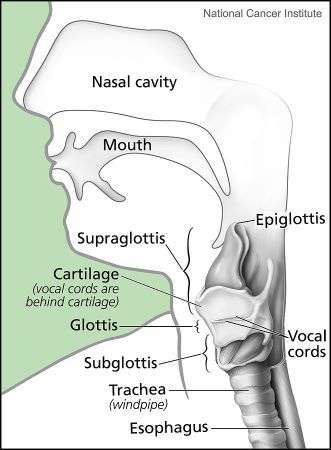
The production of speech sounds takes the use of parts of the vocal organs to produce these “sounds” that become letters within words.

See below:

Study.com|Vocal Tract Anatomy, Function & Diagram|11.21.2023

To classify such diverse speech sounds, Linguists developed a guide system known as the International Phonetic Alphabet (IPA), first published in 1888 – the IPA has received a few revisions since its first publication.

A reputable source I’ve discovered that can be helpful in an interactive way to understand the IPA can be found here – the IPA designates a specific symbol to a given sound.

As an example, the word Phonetic would be represented as: /fəˈnɛtɪk/.

Morphology

As defined, morphology is a branch of linguistics that involves the study of internal grammatical structure of words – to include the varied formation of words within a given language’s Lexicon (complete set of meaningful units in a language – usually in the form of a dictionary).

The term “morphology” first came into use in the middle of the 19th century (c. 1859) by a German linguist, August Schleicher – one credited with some of the most profound linguistic ideas of his day and age, that being: Comparative linguistic principles (more on this in a later post).

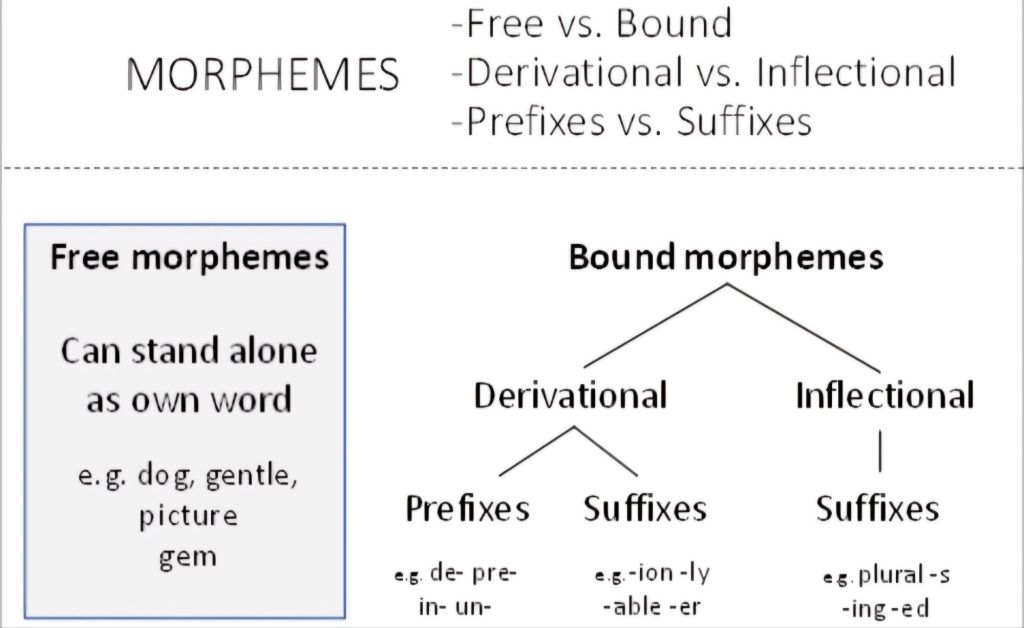
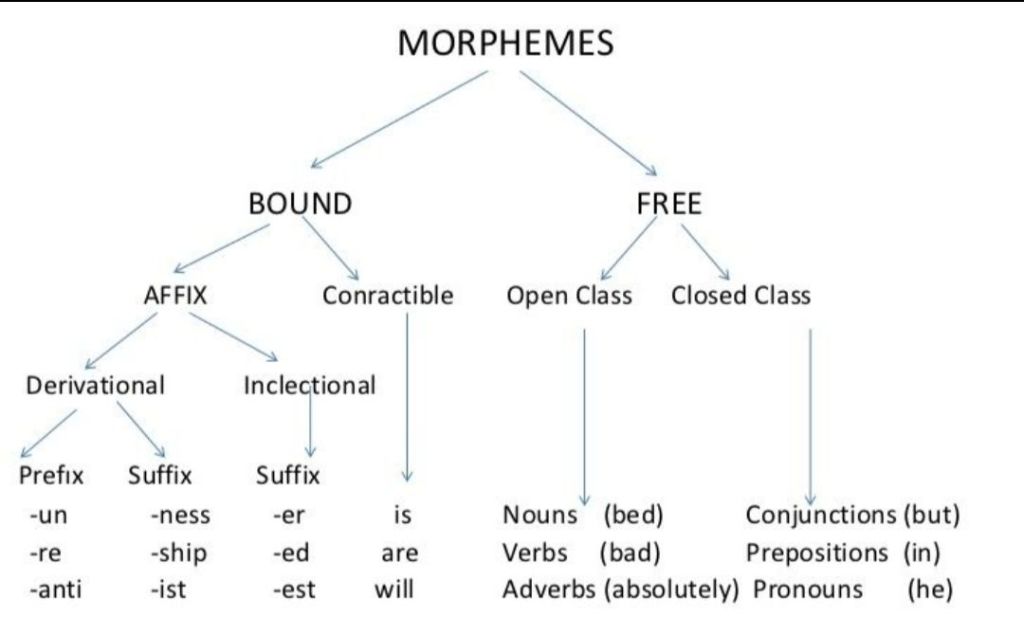
Morphology is known for its principle of morphemes, the smallest meaningful units of grammar within a word. It is important to note, however, that morphemes are not synonymous with syllables. Syllables relate more to the pronunciation of words, which is phonological, in this sense, whereas morphemes relate more to specific structures within words, and they can host multiple syllables. More on this will be shared below.

There are two main types of morphemes that have their own subdivisions. As follows:

  • Free (Unbound) Morphemes: Stand-alone words
    • Lexical – i.e., carry content; the “substance” of a word’s meaning as in relation to language as a whole
    • Gramatical – i.e., functional, can be standalone words
  • Bound Morphemes: Non-standalone, require a word integration
    • Inflectional – i.e., modifies a root word without changing its grammatical category
    • Derivational – i.e., modifies a root word changing its grammatical category

Please see the charts below for additional assistance with these concepts, as well as some examples:

Figure 1.0

Quora|04.02.2024

Figure 2.0

Quora|04.02.2023

A closing thought on morphemes as it relates to morphology:

Words can be morphemes, but not all morphemes can be words.

Syntax

As defined, Syntax is a branch of linguistics that studies the structure and formation of sentences. Syntax is a major component of grammar, and can vary between languages.

Syntax can be viewed as a standard set of rules developed to govern phrases, clauses and sentences – regardless of the syntactic order in which a language is written or spoken (more on that below). Syntax comes naturally to native speakers of a language.

Syntax is one of the major three important parts of grammar as a whole, amoung Semantics (explained below) and Phonology. Syntax allows for a speaker to correctly form complete phrases, clauses, and sentences in a logical way.

Synctactic Arrangements

There are six types of syntactic word order:

  • SOV: Subject-Object-Verb
  • VSO: Verb-Subject-Object
  • VOS: Verb-Object-Subject
  • OSV: Object-Subject-Verb
  • SVO: Subject-Verb-Object
  • OVS: Object-Verb-Subject

Each of these are present in languages of the world- though some of these word orders are more rare than the others. See below for a few examples:

  • SOV:
    • Japanese
    • Korean
  • VSO:
    • Filipino
    • Welsh
  • VOS:
    • Fijian
    • Malagasy
  • OSV:
    • Tobati
    • Warao
  • SVO:
    • English
    • Spanish
  • OVS:
    • Hixkaryana
    • Urarina

In the 1980s, a census was done by a professor of Linguistics at the University of Oregon named Russel S. Tomlin, which showed SOV Syntax was most common. SVO syntax followed suit – though presently more languages overall bear the SVO Syntax than its SOV contender.

Syntactic rules change across languages. In English, for example: conjunctions join compound sentences, adjectives modify a noun within a sentence – in a specific order; sentences often start with a subject and are followed by a verb (e.g. SVO) – that is what Syntax does for us.

Another aspect to consider when examining Syntax is diction. Diction is, in and of itself, a form of Syntax. Diction is the style of writing or speaking that someone uses; it is the choice of words. Syntax within diction also refers to the order of words within this style of writing or speaking. An example of this difference between syntax and diction, is to view it from a formal or informal perspective. An Essay or a Non-fiction book may exhibit a higher level of diction, i.e. written formally, whereas texting or speaking to friends may be much more informal and exhibit a lower level of diction.

Not all sentences are guaranteed to have meaning due to proper syntax – proper syntax can only guarantee that sentences are grammatically correct.

A closing thought on Syntax:

“Native speakers of a language learn correct syntax without realizing it.”

ThoughtCo.com

Semantics

Semantics is the study of meaning in language. Semantics can be applied to single words or can also be applied to entire phrases or clauses. It is philosophical, though analytical; both practical and open to interpretation.

There are three known nations of what Semantics entails:

  • Natural Meaning – an implied idea
    • E.g., Steam means hot
  • Conventional Meaning – a literal “answer”
    • E.g., Red traffic light means stop
  • Intentional Meaning – tailored for intent-based interpretation
    • E.g., Debbie means trouble

“Semantics largely determines our reading comprehension, how we understand others, and even what decisions we make as a result of our interpretations.”

Study.com

One of the key takeaways of what Semantics is and entails is that theories within the field help linguists to examine complex expressions and what meaning(s) can be interpreted from such expressions. In other words, Semantics helps to highlight what an expression in a language could mean.

There are nine theories (listed below) of Semantic theories of history. I won’t go into each one in this post, but that will be a topic for a later discussion.

Those theories are:

  • Ideational Semantics (c. 17th century)
    • Linguistic meaning is mental: words are used to encode and convey thoughts, or ideas…” (Britannica, accessed July 2024)
  • Possible-world Semantics (c. 18th century)
    • A theoretical concept of linguistic meaning to expressions as existing and interpreted by to what possibly could be or has been in the world.
  • Referential Semantics (c. 19th century)
    • An apparent relation between a word and the world [and]…Linguistic expressions are signs of something other than themselves…”(Britannica, accessed July 2024)
  • Fregean Semantics (c. 19th century)
    • ...the meaning of an expression consists of two elements: a referent and what he called a ‘sense'” (Britannica, accessed July, 2024)
  • Verificationist Semantics (c. 20th century)
    • …the meaning results from links between language and experience: some sentences have meaning because they are definable in terms of other sentences…” (Britannica, accessed July, 2024)
  • Behaviourist Semantics (c. 20th century)
    • …the meaning of an expression, as uttered on a particular occasion, is either (1) the behavioral stimulus that produces the utterance, (2) the behavioral response that the utterance produces, or (3) a combination of both” (Britannica, accessed July, 2024)
  • Gricean Semantics (c. 20th century)
    • …the meaning of a sentence can be understood in terms of a speaker’s intention to induce a belief in the hearer by means of the hearer’s recognition of that intention” (Britannica, accessed July 2024)
  • Truth-conditional Semantics (c. 20th century)
    • …an approach to semantics of natural language that sees meaning (or at least the meaning of assertions) as being the same as, or reducible to, their truth conditions” (Wikipedia, accessed July 2024)
  • Conceptual-role Semantics (c. 20th century)
    • …the meaning of an expression for a speaker is the same as its conceptual role in the speaker’s mental life” (Britannica, accessed July 2024)

Pragmatics

Pragmatics is the study of the use of natural language in communication – [of which includes] – the study of the relations between languages and their users (Britannica, accessed July 2024).

In Pragmatics, its primary focus lies upon something known as conversational implicatures – in other words, the relationship between what a speaker says, as implied, and how what is said creates inferences to its listener. What one speaker says may be interpreted as implicational of something else that another person hearing the same expression may infer.

There are seven other aspects of Pragmatics to consider, as listed below:

  • Cognitive Pragmatics
    • Mental processes of human communication
  • Intercultural Pragmatics
    • Communication between people of different cultures
  • Reference-Flow Management
    • Tracking syntactic references in a given expression
  • Relevance Theory
    • “A speaker’s every utterance conveys enough relevant information for it to be worth the addressee’s effort to process the meaning of an utterance.” (masterclass.com, accessed July 2024)
  • Sociolinguistics
    • Native-speaker communication between parties given a specific social group in which they belong
  • Speech Acts
    • People use language and the rules of language to accomplish tasks and goals.” (masterclass.com, accessed July 2024)
  • Theory of Mind
    • Examines how one’s mind, or mental-state, affects what and how an expression or idea is interpreted and utilized in language.

As shown here, there are many disciplines within pragmatics and what that aspect of linguistics encompasses. Pragmatics is also a field of its own within philosophy.

Contextually, when thinking of Pragmatics within Philosophy, it refers to examining language from a more abstract, broad perspective – i.e., examining one’s linguistic ‘place’ in the world as inseparable from existence within – and, that one’s ‘utterance’ of language is shared human practice in the collective human consciousness.

More on Pragmatism as it relates to Philosophy will be examined in a later post.

<<->>

I’ve gone over quite a bit, though I have only scratched the surface of what each of the five components of Linguistics are. Let’s move on to address the last question I had raised at the beginning of this post:

  • How does the development of human language differ from the communication systems of animals?

First and foremost, all animals communicate in one way or another – whether by gestures or sounds; Humans are the only ones who have developed a complex communication style and system encompassing that of language and writing.

The use of gestures, sounds, touch, smell, and other uses of the senses (e.g., Fireflies using light) are all part of a style known as a closed communication system. On the other hand, humans use a style known as an open communication system. What this means is that humans can create new meanings and messages by putting words together to form grammar in phrases, clauses, and sentences.

Studies have shown that chimpanzees (for example) could learn, and then sign, words such as banana or apple, but are still unable to learn, or sign entire phrases such as Give me an apple, I am hungry. Humans are the only ones able to learn and then sign (contextually) such phrases. The academic discipline that studies such things is called Zoosemiotics, defined as the semiotic study of the use of signs among animals. In other words, the study of the sounds and signals used in animal communication. More about Zoosemiotics will be saved for a later post.

The systems that animals use, albethey as signals, differ from human systems used – the form of symbols. The biggest case for this lies with the simple fact that animals, biologically, have more sensory receptors than humans, and instinctively react to their environment at a different level than humans.

<<->>

Conclusively, I have gone over a plethora of ideas, disciplines, thoughts, theory and basics as it encompasses Linguistics 101. There is much more that could be elaborated on, and I have only scratched the surface of what all Linguistics entails.

A few key takeaways:

  • The study of language and tongue has been around since the dawn of the sciences and is incorporated into a broad spectrum of disciplines.
  • Language Evolution is, in its own right, a constantly changing dynamic as new discoveries into linguistics arise, from new theories, to expounding on old ones.
  • Linguistics goes beyond simply the study of language. Yes, there are five key components to what Linguistics entails, but with each of those components lies more to examine, discover, and expound upon – some aspects being sociological and psychological additionally

These are just a few things to keep in mind, possibilities in discussions are boundless, so I hope I helped to teach you something new.

Any thoughts or topics that piqued your interest in which you’d like me to examine more in a later post? Feel free to let me know in the comments below!

Until next time,

– E.K.

The Wandering Wolf
Hello and welcome to Wulfhūs once more!

Join me as we examine language evolution over many eons, up to the present day. For this post, specifically, it’s going to be a basic overview of what “language” is and the phenomenon that is “language evolution.” I will also give a brief rundown on Linguistics. At the end of the post, I will be sharing my plan for the order of this extensive series to commence soon hereafter – much is to come, enjoy!

As is my way, I prefer to start my blog posts with a few questions to examine and discuss throughout.

For reference: What is Linguistics? What is Language? What is Language Evolution, and why does it occur?

<<->>

| Linguistics |

By definition, Linguistics is the study of language and its structure. There are 5 components to take into consideration as applicable to what makes up Linguistics:

  • Phonology: A branch of linguistics that deals with systems of sounds within a language or between different languages.
  • Morphology: The study of the forms of words.
  • Syntax: A branch of Linguistics focusing on a set of rules for, or as an analysis of, the syntax of a language.
  • Semantics: A branch of linguistics and logic concerned with the meaning of words, phrases, sentences or texts.
  • Pragmatics: A branch of linguistics dealing with language in use, and the contexts in which it is used.

Elaboration of each of those components is touched on a bit in my newest post.

<<->>

| Language |

Language is defined in three ways as according to Oxford definition sources:

  • The principal method of human communication, consisting of words used in a structured and conventional way and conveyed by speech, writing, or gesture.
  • A system of communication used by a particular country or community.
  • The style of a piece of writing or speech.

Now, please tag along further, as we travel back in time to where it all began.

<<->>

Although the origin and first record of language is still debated to this day, the most common belief is that the very first record of language having been discovered was Egyptian, from 2690 BCE. Next came Sumerian, and then Akkadian – both of which were more commonly recognized previously as the first. To date, there are roughly 7,000 languages spoken worldwide.

As I was working through my research for this blog, I came across a post from a Travel Agency on their website that included a visual timeline of language origin as according to record of when first written – feel free to check it out here.

<<->>

How long has research into the origin of language been around, and what is the “fruit of its labor?”

Understanding the origin and functionality of language serves countless reasons – the most impactful being, simply, for the sake of human cooperation. In a primitive sense, this was: cooperation in hunting, promoting bonding, nurture, and a plethora of other functions and purposes for the sake of survival.

An important aspect to consider when it comes to language is context. As shown above, there are three definitions for language; context is indicative of whether we are considering verbal, non-verbal, or written language.

When it comes to where the first record of research began, it was Greek philosophers who began to study and hypothesize language origin in the Third and Fourth centuries BCE. In those times, the focus  of their hypothesizing was also amidst debates from two different theorizing groups of the time: Conventionalists and Naturalists.

Conventionalists erred on the perception that the relationship between the formation of language and its meaning (purpose) was subjective and canon for society, whereas Naturalists erred on the perception that language and its meaning (purpose) had a natural association with whatsoever it referred to in the real world. These philisophical hypotheses led to what is now known, more recognizably, as the discipline of Etymology – the study of words.

These first examinations of language by Greek Philosophers, while paired with research that had been started over in India, also paved the way for a new scientific discipline to get established – that of which came to be known later as Linguistics.

<<->>

Without getting too in depth with the timeline of linguistics development (more on this, and credit given to its author, here), I’d like to jump ahead to more presently, come the 20th Century when Swiss Linguist, Ferdinand de Saussure, hypothesized the following Principles of Linguistics:

  • Langue vs. Parole:
    • Langue: Language System
    • Parole: Language Behaviour

Stemming from Academia c. 1916 by Swiss Linguist Ferdinand De Saussure when he published his Course in General Linguistics, Langue refers to an abstract system of “signs” (meaningful “events”) prevalent in structure  of a language. He credited language as a system inandofitself in this context, rather than it’s counterpart Parole, which refers to “individual expressions” within a language – of which become products of Langue.

“The language system is not a function of the speaking subject, it is the product which the individual registers passively…”

– Ferdinand De Saussure

These principles postulated, additionally, that a structural approach to linguistics is to not be restricted to a finite, streamlined, method of processes encompassing the study of present meaning, phonology and grammar (i.e focusing only on historical context of language origin) – that by analyzing language with both Langue and Parole summed to their product, then and only then, a language can be studied, and understood, wholeheartedly. Unfortunately, though, this philosophy was not widely accepted by other thinkers of the time – it wasn’t until much later that this philosophy was reconsidered and expounded upon a couple of decades later – in the realm of what came to be known as linguistic Structuralism.

What is Structural Linguistics (Structuralism) and why is this important to the origin of language and its evolution?

As defined, according to Oxford Dictionary sources:

  • Structuralism: A branch of linguistics that deals with language as a system of interrelated structures, [and] emphasizing the accurate identification of syntactic and lexical form as opposed to meaning and historical development.

What this implies, then, is that Structuralism (linguistically) provides a way to learn and study language with definitive pattern recognition – i.e., language can be divided into various different components with relation to each other, and we can analyze how these components interact in order to form, and understand, its grammatical rules.

Structuralism then, in the context of language evolution, offers us a way to study how grammatical cases have changed over time. It also allows for a way to analyze language from a subjective, Synchronic (study of language at a particular, given point in time) perspective rather than an objective, Diachronic (study of language change, historically over time) perspective.

An important last consideration I’d like to make on the topic of Structuralism is: the first instance of this branch of linguistic study, as it relates to language, stems from a European standpoint. Though very similar, the American standpoint on Structuralism has more of a focus on formal models of language rather than this philisophical approach to the idea or theory of what Structuralism is and how it gets applied to study. More about this will come in a later post.

<<->>

| Language Evolution |

We’ve gone over quite a bit as relating to Language overall so far – its history and its study through the development of Linguistics as a field – now we will transition to discuss language evolution.

<<->>

What is Language Evolution, and why is it important to learn about?

For many eons, humans have utilized language as a way to communicate, cooperate, and simply coexist. With such a broad time frame – and like the infrastructure of our communities – language also ebbs, flows, and grows. Humans have developed a slew of language systems in order to communicate throughout history – whether verbal, non-verbal, or through writing systems – such as the Cuneiform in the Ancient Middle-East, to the Indigenous Petroglyphs of the Americas.

Overall, language evolution is a very broad topic for discussion. Study encompassing it includes aspects of natural sciences such as: anthropology, archaeology, biology, philosophy, and many other disciplines, respectively. In other words, much of what impacts the phenomenon of language evolution is dependent on many variables, and there is no single answer as to its purpose and applicability for modern applications.

When it comes to examining language evolution, there are two running theories postulated to this day as to the origin of “how” and “why” language evolved. These theories are known as:

  • Continuity Theory: A theory developed that postulated language evolved gradually from earlier forms of communication in non-human animals and homonids.
  • Discontinuity Theory: A theory developed that postulated human language was unique by nature – that it “spontaneously appeared” as opposed to having evolved from said animals’ or hominids’ method(s) of communication.

These are the two most prevalent theories debated and most commonly recognized, though other theories such as having to do with genetics and learning in social interactions have surfaced more recently.

As much debate as is still prominent in modern-day interpretations and attempts at explanation, the reasoning behind how language evolution came to be – and a “language-ready” brain developed – still remains much a mystery.

The one constant that has been supported across the board, though, is that human language – whether verbal, non-verbal, or written – and language evolution, must have all evolved from earlier, more primitive forms of communication.

<<->>

In closing, the phenomena of languages and language evolution are both complex. What has been covered in this post only narrowly touches the surface of the examination into all of these topics of study.

Conclusively, while linguistics focuses on the study of language according to its structure (in words, as well as in sentences and phrases), language evolution focuses more on the origin of language from various different scientific disciplines – all of which correlate with its prevalence, usage, and philosophies. Additionally, the phenomenon of language and language evolution are more complex than can be warranted by a single, basic interpretation or explanation for/and of its existence.

<<->>

Now, as promised, please see below for a brief rundown on what to expect from the start of this series moving forward~

| The Scope: |

Series I: An Introduction to Linguistics

  • 5 Components of Linguistics
  • An Introduction to Historical Linguistics
  • An Introduction to Literary Linguistics
  • An Introduction to Language Acquisition, Dialectology, and Conversation Analysis
  • An Introduction to Psycholinguistics
  • An Introduction to Sociolinguistics

<<->>

Series II: Independent Study: Proto-languages

  • Proto-Indo-European/Germanic: An Introduction
    • North Germanic
    • East Germanic
    • West Germanic
  • Proto Slavic: An Introduction
  • Proto-Semetic: An Introduction
  • Proto-Sino-Tibetan: An Introduction

As I bring this post to a close, I would like to thank you all for joining me once more, and I look forward to exploring all of these concepts with you in due time.

Stay tuned for more!

Cordially,

– E.K.

The Wandering Wolf

Hello again, and welcome once more to Wulfhūs!

In our last blog (Gnosis: An Introduction), we examined the surface-basics of what “Gnosis” was in the broader Pagan Community, as well as the difference between verified, unverified, and shared personal gnosis. Additionally, I shared a UPG of my own.

Let’s take a moment and review the basics:

  • Unverified Personal Gnosis (UPG):
    • Knowledge had or acquired from personal experience and unverified in Lore of a given religion.
  • Verified Personal Gnosis (VPG):
    • Knowledge had or acquired from personal experience and verified in Lore of a given religion.
  • Shared Personal Gnosis (SPG):
    • UPG that is held by multiple people of a given religion – can be verified or unverified by Lore in a given religion.

Now that we have reviewed the basics once more, I’d like to examine the concept of Gnosis a bit deeper and will open with the questions:

  • What is “Gnosis,” truly, and why is it so important – if important at all?
  • How is “Gnosis” applicable to modern-day interpretations of what it is or could be?

For starters, the term Gnosis stems from the common, feminine, Greek noun Gnōsis, meaning, quite directly: Knowledge or Awareness.

During Greco-Roman times (where history first claims its origin to be from), the term was utilized most commonly by various Hellenistic religions and philosophies at that time –  it was spiritual knowledge or spiritual insight into humanity’s nature as being “divine.” This interpretation stemmed from Gnosticism, an ancient collection of religious ideas and systems first brought into fruition in the late first century common era from Jewish and early-Christian sects.

For the sake of this post, I won’t go through an entire history lesson on Gnosticism, I’ll perhaps save that for another time, but I at least wanted to share the term’s first-known origin.

<<->>

Now, moving on to examining the other questions above: Why is Gnosis so important – if important at all?

This is a complicated question to examine for the fact that – as defined (outside of the philosophies of Gnosticism or religion as a whole), the term Gnosis does not reify divine intervention or related, and we use the term most frequently nowadays for concepts religion-related, at least in the broader Pagan community. However, “Gnosis” is really an umbrella term that implies, by definition, any knowledge, insight, or awareness had or acquired. As a result, for many, Gnosis is important, and, alternatively, not so much for others.

Another important way of examining this is that its importance, respectively, lies with the one who experiences it. It’s important to note, that, what’s important to one may not be important to another – that’s why Unverified Personal Gnosis (UPG) is, inofitself, personal.

Reminder: UPG can become VPG, and of which can later become SPG – given each beholder experiences that of the same as the original beholder.

When taking into consideration the part of the question …if important at all…this is open to interpretation. I, myself, interpret any form of Gnosis as important – I will now leave it there for you to interpret as you will.

<<->>

How is “Gnosis” applicable to modern-day interpretations of what it is or could be?

This is an interesting aspect to consider because, once again, it is open to personal interpretation. For this question, specifically, I’d like to take a couple steps back once more and discuss UPG briefly.

Let’s take Fyrnsidu (Anglo-Saxon Paganism) into consideration again, as I know more to do with that then general philosophical belief encompassing the concept of Gnosis. Again, UPG means Unverified Personal Gnosis. In Fyrnsidu, this is interpreted more commonly, from modern perspective, as epiphany or theophany – depending on the circumstances of the “UPG”-in-question.

Some Fyrnsidere view UPG with skepticism, whereas others view it with definitive governance – e.g., Christians who believe in literal vs. figurative interpretations of the Holy Bible. This plays an important role in the  interpretation of Gnosis. Gnosticists, in their way of thinking, view(ed) Gnosis as literal divine (spiritual) knowledge or insight (as formerly mentioned).

You may ask: why, then, with skepticism? Well, the cut and dry explanation for this, as in relation to my Fyrnsidere perspective, is that our Gods are unpredictable. They are clever. And, as implicated in various works of Lore, our Gods are deemed to be untrustworthy in some instances and even lie. That, inofitself, more or less summarizes reason for skepticism. For more perspective on this aspect of the concept, I recommend checking out this article from a fellow Fyrnsidere blogger who also puts it fairly cut and dry.

<<->>

As I start to bring this blog to a close, I’d like to share a brief summary of what Fyrnsidu (Anglo-Saxon Paganism) is and where it comes from. UPG is, to me, an important aspect to consider within Fyrnsidu, though even still is open to your own interpretation. A deeper explanation of Fyrnsidu as a whole will be given in a study-series I intend to write at a later time, but for now, here is a brief overview:

What is Fyrnsidu? Where did it originate from? Is there a distinct culture, language, or slew of traditions the religion entails?

Fyrnsidu is a modern religion based upon the religion of the pre-Christian Germanic Tribes that settled in Britain in the fifth century of the common era. The people that brought this religion were known commonly as Anglo-Saxons, and their polytheistic religion also entailed worship of one’s ancestors and the wights (spirits) of the land and in our homes.

From a modern standpoint, it is important to note that Fyrnsidu is a Reconstruction. It has been adapted for modern life and ethics – its practices and traditions reconstructed from available textual and archeological records.

The word “Fyrnsidu” is a compound word that combines Fyrn, meaning “ancient” or “old,” and Sidu, meaning “custom” or “habit” from Old English.

The name “Fyrnsidu” was coined by one named Robert “Osric” Holman back in 2001, though Mr. Holman has since separated from Fyrnsidu and now leads a society known as the Ingwine Society. The best website to learn more about Fyrnsidu can be found at Fyrnsidu.faith.

<<->>

Closing thoughts on “Gnosis” and UPG:

Gnosis has been around for a long time. Unverified, Verified, or Shared, Gnosis is a concept of personal knowledge. It exists in many forms and in many disciplines.

Fyrnsidu, though adapted to modern practices and traditions, has also been around for a long time – including its language, Old English.

Gnosis stems from a Greek word and came more into common use when Gnosticism came around – so I ask in closing:

  • Is Personal Gnosis (whether Unverified, Verified, or Shared) important to you?
  • Is it applicable to modern day perceptions?
  • Is it worth the sentiments, “praise,” and validity many feel it is worth?

Please feel free to let me know what your thoughts are in the comments below, and thank you for reading!

Cordially,

– E.K.

The Wandering Wolf

Hello and welcome once more to Wulfhūs!

Today, we will examine the concept of Gnosis (Knowledge) as applicable to the Pagan Community, as well as a personal testimonial I wish to share related to the topic-at-hand.

<<->>

There is a concept in the broader Pagan community known as personal gnosis (knowledge), and there are three types:

  • Unverified Personal Gnosis (UPG)
  • Verified Personal Gnosis (VPG)
  • Shared Personal Gnosis (SPG)

What does Verified vs. Unverified mean? And how do they relate to Shared?

Well, a Verified Personal Gnosis is knowledge had, or acquired, that can be wholly supported by Lore encompassing a given religion (in this case, I’d like to refer to Anglo-Saxon Paganism).

An example: an Anglo-Saxon Pagan (or – Heathen – both terms are used interchangeably nowadays, and, i.e. ASH or ASP) has a vision of something they feel is important and applicable to them. Later on, this ASH then comes across an Anglo-Saxon Paganism (Fyrnsidu) specific text that perfectly resonates, and reflects, with exactly that of which they had envisioned. As a result, this then is a Verified Personal Gnosis (VPG).

This leads well into what a Shared Personal Gnosis (SPG) entails, though gets a bit complicated.

If, say, this ASH decides to share what he had envisioned with his fellow AS companions or kinsmen, then it becomes Unverified once more, as unless his companions or kinsmen also experience the very same personal gnosis, it cannot be verified.

The Personal Gnosis imbued by this initial ASH remains personal and unverified if it can not be verified by Lore, and is not shared if the others shared with do not experience the same personal gnosis.

For the record, though – this concept can also go another way:

Both a UPG and an SPG can become a VPG.

How so, you may ask?

The answer lies with another example:

– A group of Archaeologists are at a new dig-site. While they are digging, they come across a new Fyrnsidu text of old, and in this text, it exhibits information that was previously unknown to the Fyrnsidu community.

As a result, any UPG(s) (a) Fyrnsidere may have had encompassing content for whatever was in that text (or, collectively, if shared) has now become a VPG.

As you can see, this is quite the intriguing concept, at least in my opinion, so its ‘ebb’ and ‘flow’ is definitely as volatile as a flowing river.

Now. Without further adieu, I’d like to move on into sharing a personal UPG of my own, and perhaps such an example, will help to elaborate on what a UPG is, and how important its concept is, to the broader Pagan community.

<<->>

| The Testimonial: My Pilgrimmage UPG |

I was born and raised Roman Catholic, and that was what I carried with me up to the age of around 16/17, when I had matured a bit and began to think for myself. As an adoptee, my pilgrimage is a route that may differ from many, and my pilgrimage into this faith was long-coming and not solidified until I reached my early 20s.

When I later discovered my ancestral and ethnic roots, a process that was full of emotion, surprise and, initially, skepticism. I, several times during my initial pilgrimage of faith, bounced between Agnostic, Spiritual, Norse Heathen, Norse Wiccan, and finally, Fyrnsidu.

I had spent hours, initially, researching various different cultures, religions, and ancient peoples’ history; it took months before I finally settled on Fyrnsidu as my final declaration of faith from there-on-out. I started to delve more into Viking culture and history, focusing more attention on my ancestral roots. With fairly consistent updates to my ethnicity and heritage developing as science and technology continued to advance, I took all that of which I had indulged myself with a grain of salt.

I later decided to take a gambit and delved as deep as I could into Anglo-Saxon Heathenry (from what little is known modern-day about that people) and history, and then between various feelings, a couple visions, and among other factors in my life at the time; I found Anglo-Saxon Heathenry (Fyrnsidu) to be a faith I began to wholly accept, believe in and study. Finally, I felt at home and within what seemed to be my ‘niche’.

As I began small practices (first with just prayers offered to the Gods), I began to take note of noticeable changes in home and life, both relationship-wise, and, financially – amoung other things.

This all was good and well enough of a wake-up call and ‘epiphany’ if you will for me and where my own UPG (self-truth and awakening) took place.

From this point on, my relationship with the Gods, Wights, Omens, and Praxis only grew stronger by nature.

This is my truth, a sentimental UPG of my own.

<<->>

We may have only breezed over the surface of this concept this time, more is to come, but for now, I hope this was an informative introduction to the concept.

As I bring this post to a close, I would like to thank you all for joining me, and I look forward to exploring more of these concepts, and more, with you all in due time. Stay Tuned for more!

Save Travels!

– E.K.

The Wandering Wolf

The Journey Begins


Thanks for joining me!
“Adventure isn’t about seeking danger or taking risks; it’s about embracing life with a sense of curiosity and enthusiasm.”

– Unknown

<<->>

New Beginnings | The Three “W’s”

Good evening, and welcome to Wulfhūs: The Wandering Wolf Blog!
I’m proud to be here, and for this very first post, I would like to get right into the nitty-gritty introduction of this blogging website, who I am, amoung, well, the other two “W’s”.
Shall we?

New Beginnings.

What does that mean? Well, it can mean many things, respectively – in this instance, we’ll start with a basic interpretation. The beginning of something new…

“W” #1: Who?

One of the very first questions to an introduction is: Who are you?
My name is Eohric- please, feel free to call me Eryc. I live in the suburbs of Minneapolis, Minnesota, in the Upper Midwest USA, and have lived here for most of my life (for all but two short years).

I enjoy reading (once in a while), writing, billiards, hiking, camping, and other miscellaneous outdoor activities. Some of my more passive hobbies include: video games, researching and studying, Conlanging (constructing languages), worldbuilding, card games, and board games (to include TTRPGs).
I also serve in the Army National Guard, am an aspiring Author, and I just started an LLC named: Primrose Hearth & Holistic that I’m looking to grow and thrive with- to ebb and flow with like a river. In other words- who am I? I am a “Jack-of-all-Trades” and just happen to know a little bit about a lot of different things.

“W” #2: What?

The next question to an introduction: What is this? Or, rather, in a different way – what is this website for?

Well, Seekers. This question is simply answered with: I deliberated, and later chose to take my writing to a new level- that of bringing it online in-short, rather than first online “in-long.”

For the sake of the explanation, this means that instead of relying on a “long novel” to get my writing out, I chose to also start small with this website and write short works; I intend to write them on various different disciplines.

“W” #3: Why?

The next and final question of this introduction: Why? Why here, why now? Why…at all?

Well, Wanderers – a couple of great questions there. My answer, or rebuttal, rather, is simply this: Why not ever?
This introductory style of question can be a multi-layered endeavor – but for now, I shall save the philosophies.
I shall leave you with this parting thought, though: Asking why is the easy path. Asking why not is the road less traveled.

And that, Adventurers. That is what this is all about.

<<->>

So journey with me: seekers, travelers, wanderers, and adventurers alike – tag along as we embark on a life’s worth of travels. Travels of the soul, travels of the world, travels of spirituality and psyche – everything under the sun and moon – toward a simple goal of enjoying what the universe (and the gods, my fellow heathens) has to offer.
Cordially,

– Eohric Kinsman

The Wandering Wolf